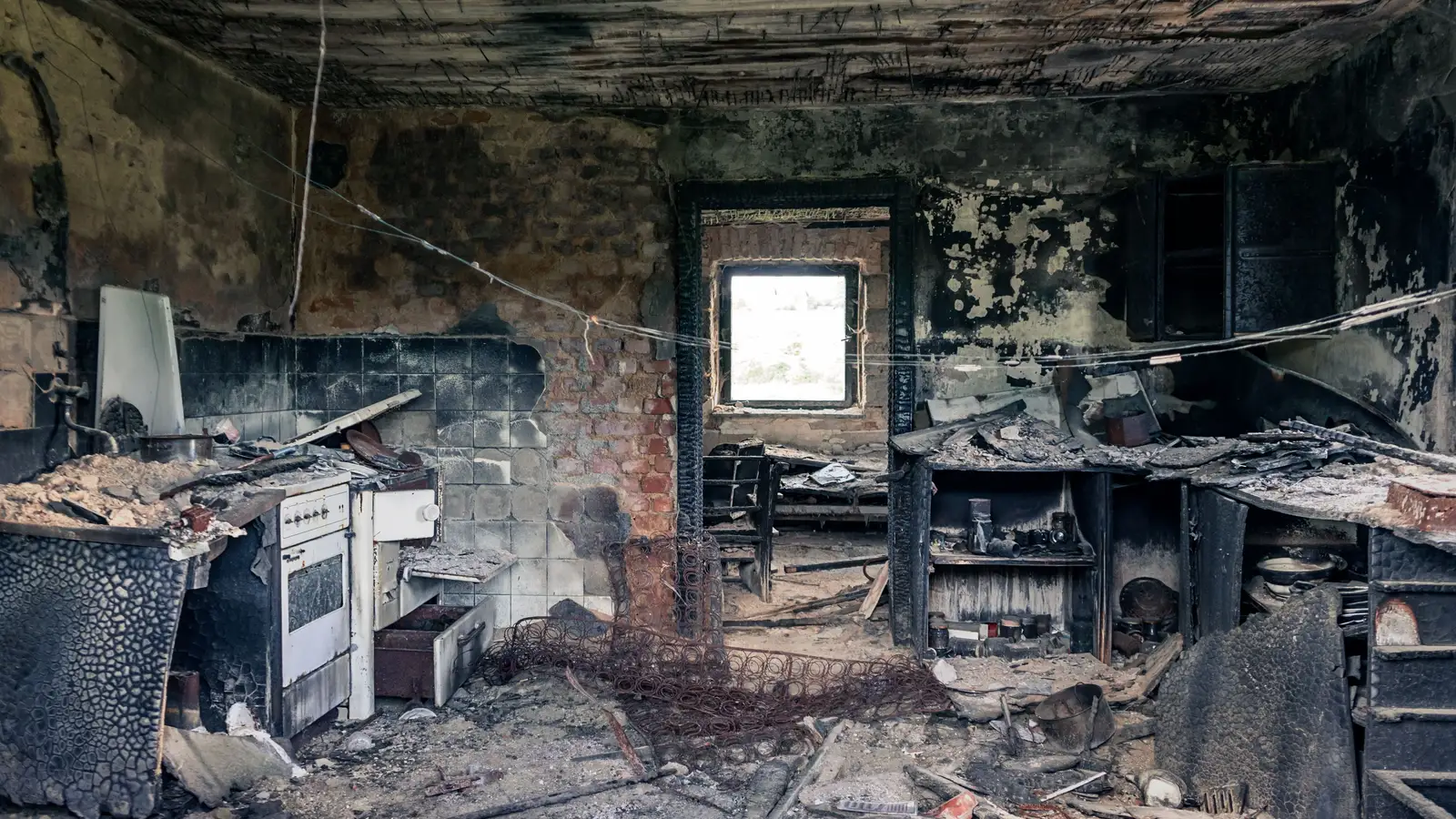
A fire is disorienting and exhausting. Knowing what to do in the hours that follow can protect everyone involved and limit the secondary damage that keeps causing harm after the flames are gone.
Before you re-enter
Never go back inside until the fire department or appropriate authorities declare the property safe. Structural damage, smoldering hot spots, and compromised utilities are real hazards.
A practical checklist
- Contact your insurance provider as soon as possible to start the claim.
- Photograph visible damage only from safe areas.
- Keep people and pets away from affected spaces.
- Arrange emergency board-up or stabilization if windows, doors, or the roof are open to the elements.
- Save receipts for lodging, meals, and other emergency expenses.
What not to do
- Don’t touch soot-covered surfaces — residues can stain permanently and spread.
- Don’t wash walls or ceilings without professional guidance.
- Don’t use affected electrical appliances or turn on the HVAC until it’s evaluated.
- Don’t eat food exposed to heat, smoke, soot, or firefighting chemicals.
Why secondary damage matters
Fire damage rarely stays put. Smoke and soot travel into rooms far from the fire, and water used to extinguish the flames soaks into materials and creates conditions for mold. Prompt mitigation stabilizes the property while a full restoration plan is developed.
After authorities declare your property safe, call Emrick Services at 502-876-1891. We handle stabilization, smoke and soot cleanup, odor treatment, water mitigation, and reconstruction — one team from first call to rebuild.